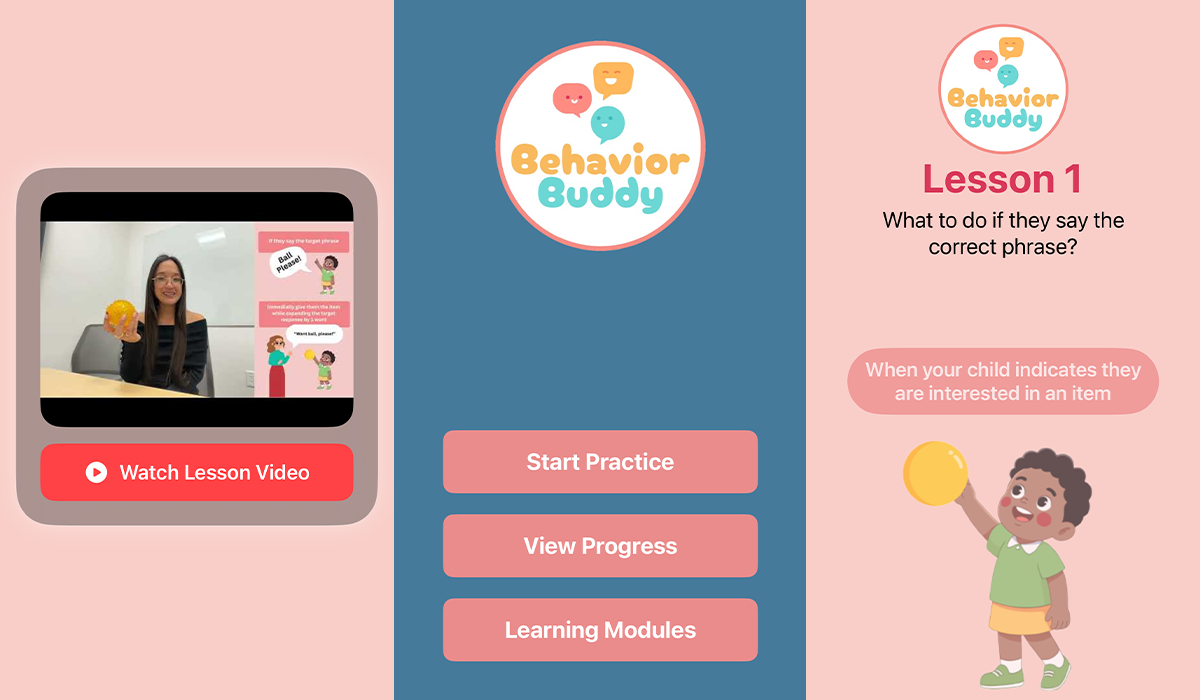
‘A game changer’: AI app offers support to caregivers of children with autism
Summary
The Behavior Buddy app, developed by UT San Antonio researchers, offers caregivers of children with autism practical support and behavior analysis tools directly on their phones, addressing a critical shortage of autism services.
Why It Matters
The app is significant as it provides essential resources to caregivers who often lack access to professional support, especially in underserved and rural areas. It leverages AI to enhance learning at home, potentially improving outcomes for children with autism and their families.
Key Takeaways
- Behavior Buddy app offers real-time support for caregivers of children with autism.
- The app addresses the shortage of autism services in Texas, providing tools for effective home practice.
- AI-driven features include behavioral skills training and personalized feedback to enhance learning.
- Initial testing shows positive user feedback, indicating the app's potential as a game changer.
- The research team is conducting a randomized control trial to validate the app's effectiveness.
Education & Human Development ‘A game changer’: AI app offers support to caregivers of children with autism February 24, 2026 3 minutes Katelyn Juarez Share this story Not all caregivers have the tools they need at home to manage communication barriers with children with autism. UT San Antonio researchers have developed an app to provide access and convenience in the palm of their hand. Housed in the Brain Health Consortium at UT San Antonio, Behavior Buddy offers timely, practical support when families need it and enhances existing services outside of scheduled sessions. The app serves as a tool to remind caregivers of proper techniques and best practices. Texas faces a severe shortage of autism services: an estimated 250,000 residents with autism rely on only 5,665 BCBAs, according to two studies. With a recommended caseload of 12 children per provider, about 73% lack access to therapy. The gap is wider in rural communities, where services are often nonexistent. The app’s co-creator, Leslie Neely, a UT San Antonio professor in the Department of Educational Psychology in the College of Education and Human Development and Associate Director of the Brain Health Consortium, explains the driving force behind the project. “Originally, the idea stemmed from something that’s always been an underlying motivation for my research: to extend resources to underserved areas and improve the sustainability of our interventions,” Neely said. Drawing from personal experience, Neely unders...
![[2603.05659] When Rubrics Fail: Error Enumeration as Reward in Reference-Free RL Post-Training for Virtual Try-On](https://arxiv.org/static/browse/0.3.4/images/arxiv-logo-fb.png)